

16th Sep 2026
The Complete Trampoline Buying Guide: How to Choose the Right Trampoline for Your Family
Buying a trampoline is a bigger decision than it first looks. Beyond "which one's the biggest" or "which one's cheapest," you're choosing something that'll live in your garden for years, get used in all weathers, and needs to be safe enough that you can relax while the kids are bouncing. With so many shapes, sizes and price points on the market, it's easy to feel overwhelmed.
This guide walks through the questions worth asking before you buy, so you end up with a trampoline that actually suits your space, your family and your budget - not just the one that looked good in a photo.
Start with your garden, not the trampoline
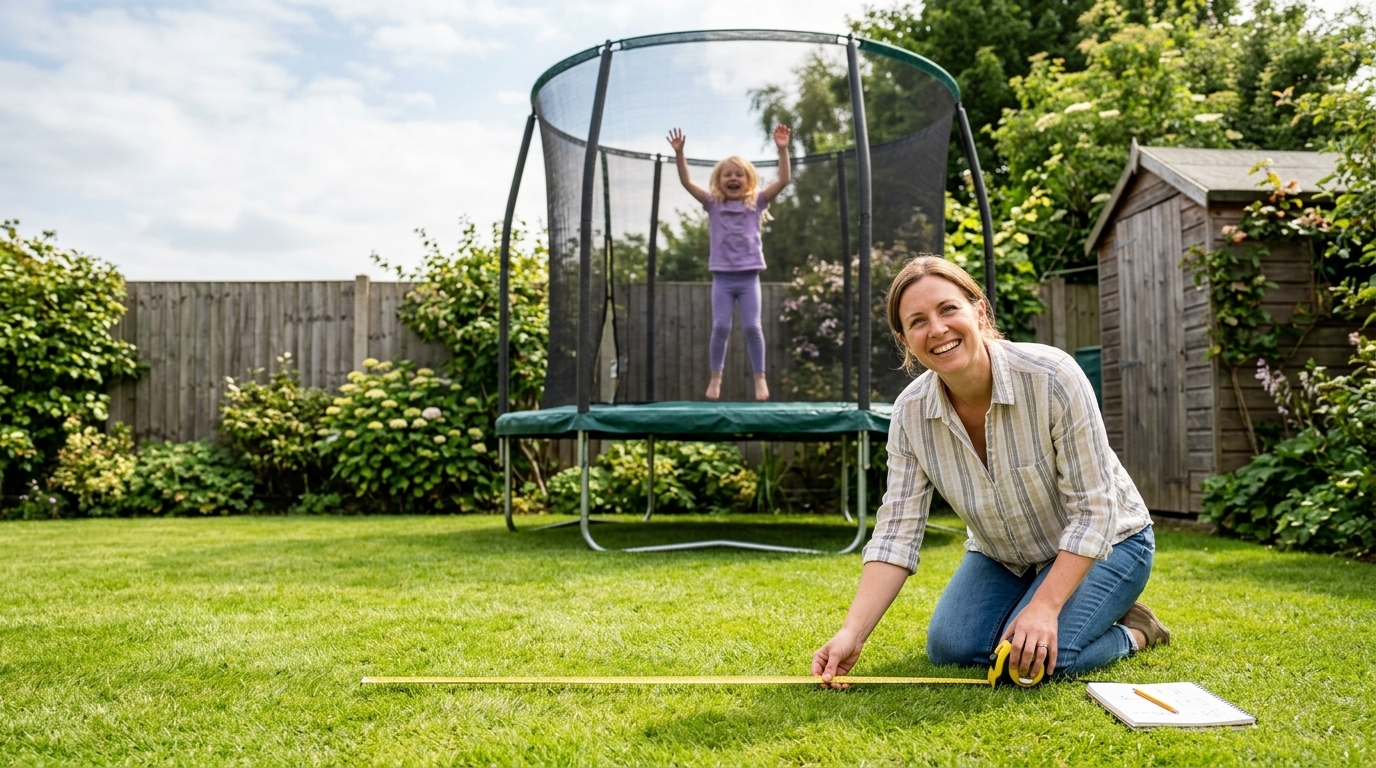
It's tempting to fall in love with a trampoline first and figure out where it'll go later. Do it the other way round. Measure the space you actually have available, and remember a trampoline needs clearance on every side - most manufacturers recommend at least 2 metres of free space around the perimeter, away from fences, sheds, washing lines and overhanging branches.
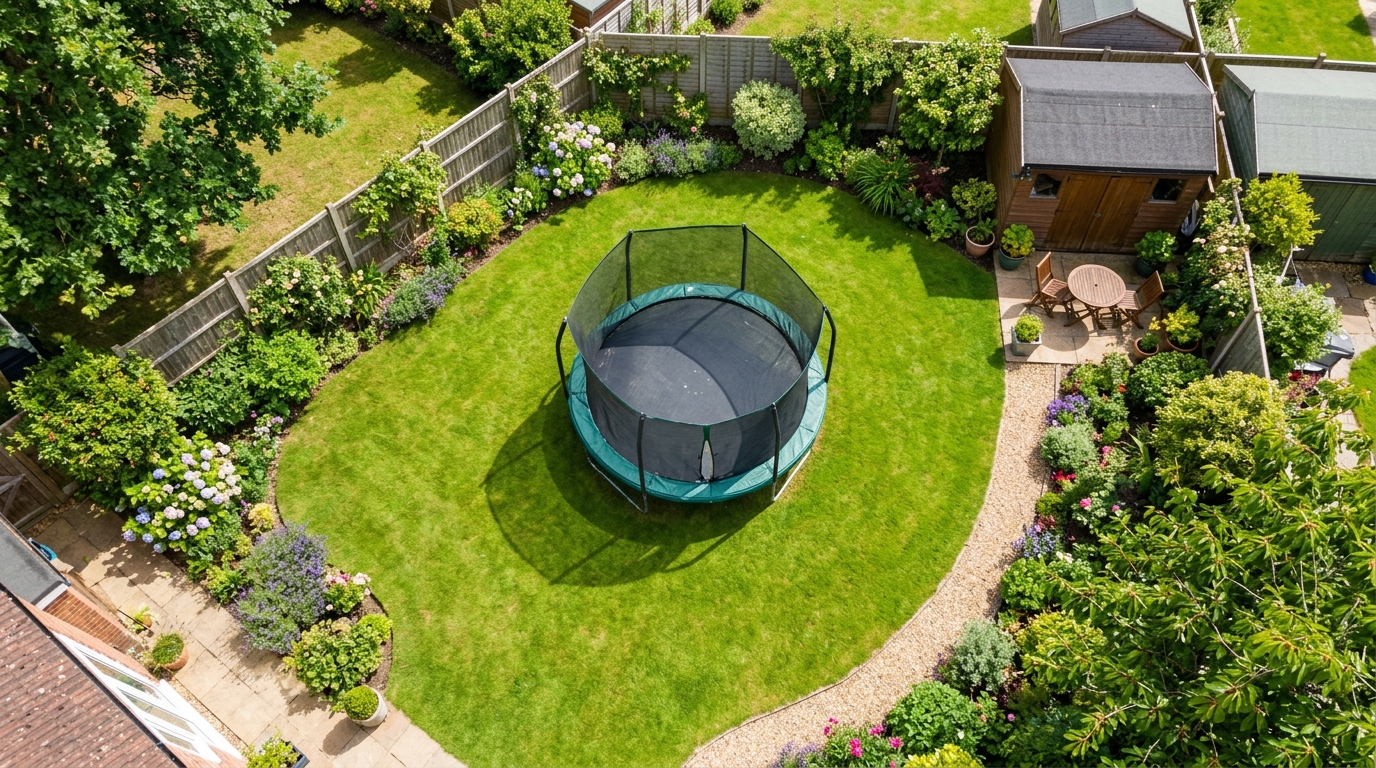
Also think about the ground itself. A flat, level area of lawn is ideal for an above-ground trampoline. If you're considering an in-ground or flat-to-the-ground model, you'll need to check that the area can be dug out and that nothing - pipes, cables, tree roots - is in the way underneath.
Above-ground, in-ground, or flat-to-the-ground?
This is usually the first big decision, and it comes down to garden layout, budget and how the trampoline fits your outdoor space visually.
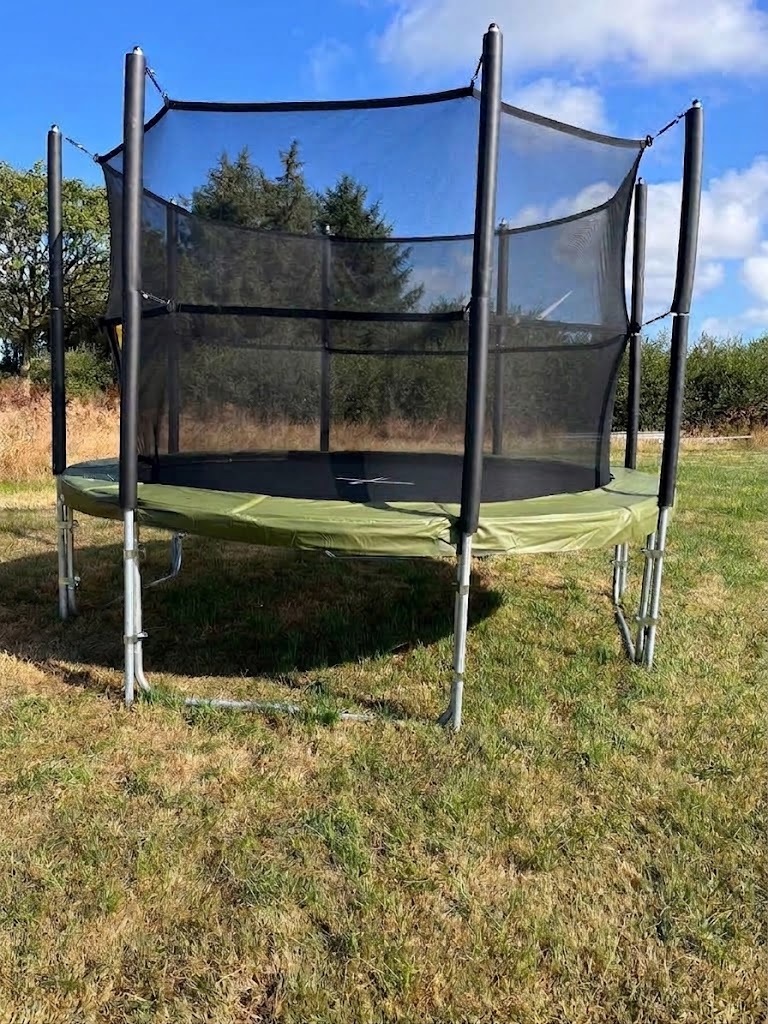
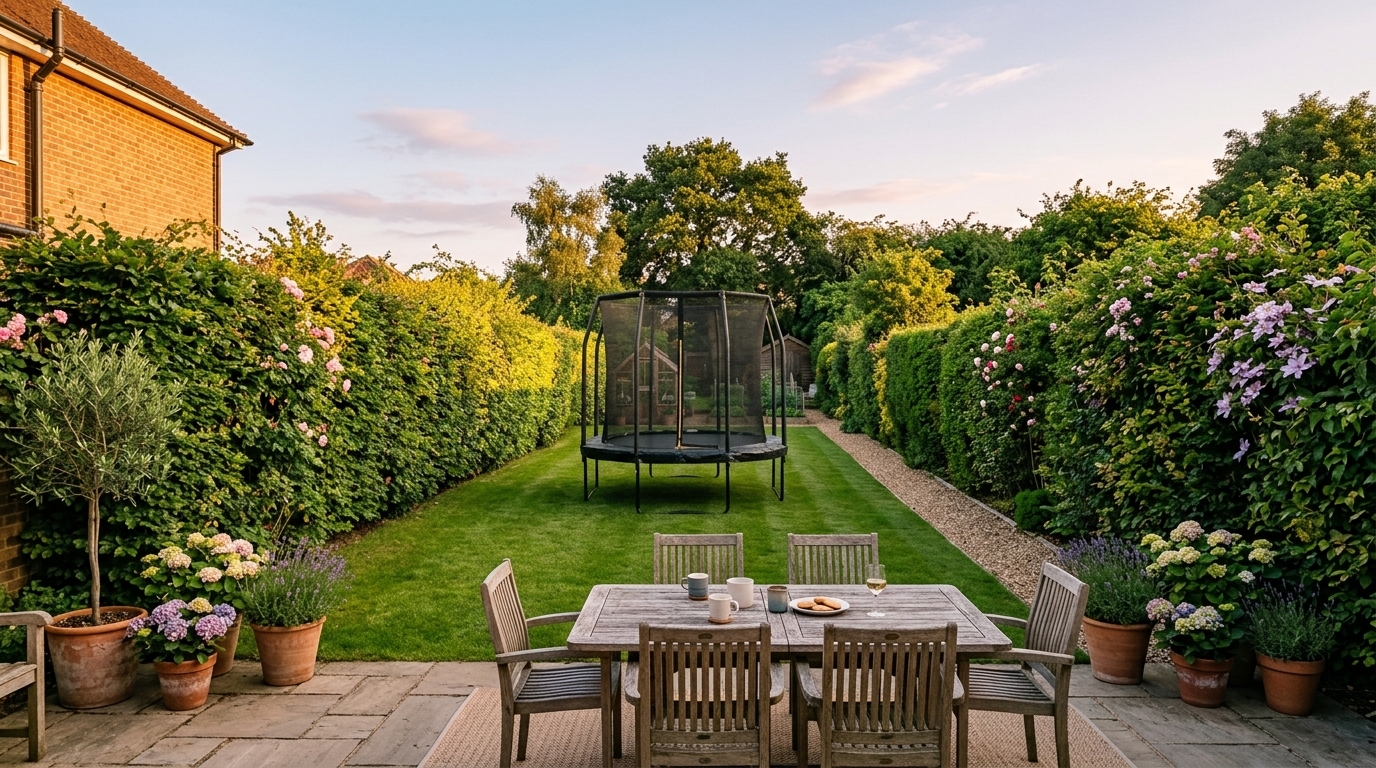
Above-ground trampolines sit on legs, usually with a safety enclosure net around the jumping surface. They're the quickest and cheapest to install, and they can go almost anywhere with enough clearance. The trade-off is that they're the most visually prominent option in a garden.
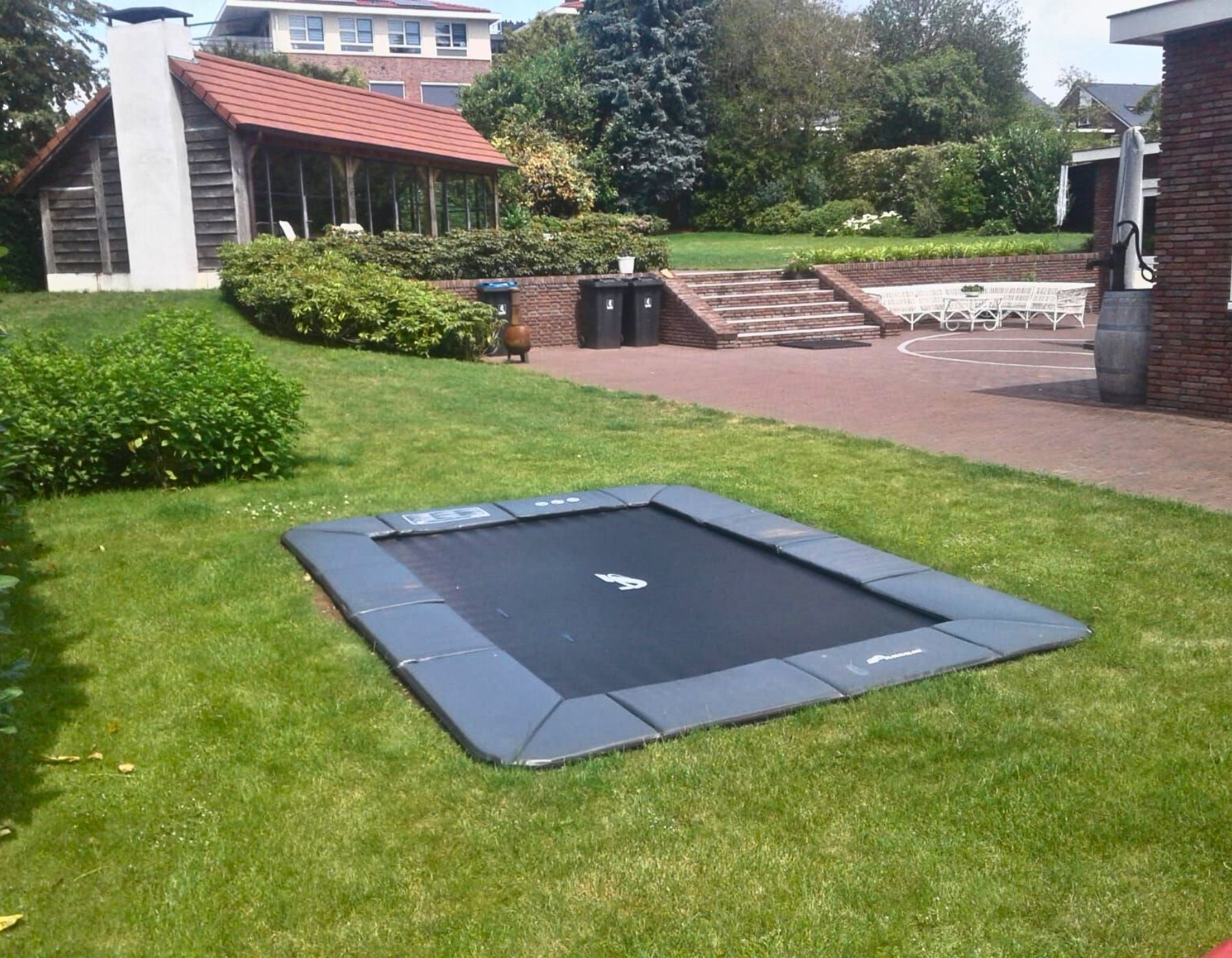
In-ground and flat-to-the-ground trampolines sit at or near lawn level, either in a dug-out pit or with a design that keeps the frame low. They blend into a garden much more naturally and remove the "climbing up" step for younger children, but they take more work to install and usually cost more once you factor in preparing the ground.
Neither is objectively better - it's a question of which suits your garden and how much groundwork you're willing to take on.
Choosing a size and shape
Trampolines come in round, rectangular and oval shapes, and sizes typically range from compact 8ft models up to large 14ft-plus trampolines built for bigger gardens and older kids.
As a rough guide:
Round trampolines are the most common choice for family gardens - they're a natural fit for bouncing in the centre and tend to be the most budget-friendly for their size. Rectangular trampolines give a larger, more even jumping surface and are popular with older children and more serious or sporty jumpers, since the bounce is more consistent across the mat. Oval trampolines sit in between, often chosen simply because they fit an awkward garden shape better than a round or rectangular model would.
Whichever shape you're leaning towards, always check the actual footprint (including the safety enclosure, if it has one) against your available space before you buy - a trampoline advertised by its jumping surface size will need noticeably more room than that once the enclosure and frame are included.
We've put together a more detailed breakdown of sizing in our dedicated trampoline size guide, which is worth a read once you've narrowed down the shape.
Safety features to check before you buy
Safety is where it's worth spending a little extra care, and a few extra pounds, rather than cutting corners.
Look for a full safety enclosure net on above-ground models, with padding that fully covers the springs and frame edges - this is what stops feet and hands finding their way into the springs during a bounce. Check what certification the trampoline carries; reputable trampolines sold in the UK and EU should meet recognised safety standards, and it's worth asking the retailer directly if this isn't clearly listed.
It's also worth thinking about who'll be using the trampoline and checking the manufacturer's stated weight limit and recommended age range accordingly, rather than assuming "bigger trampoline means higher weight limit" - this varies by model and is worth confirming directly.
Think about warranty and after-sales support
A trampoline is an outdoor product that takes a genuine battering from weather, UV exposure and daily use, so warranty terms are worth comparing properly rather than skimming. Check what's covered on the frame versus the jumping mat, safety pad and springs individually, as these often carry different warranty lengths, and find out whether spare parts are readily available if something wears out a few years down the line - pads and mats are consumable items that will eventually need replacing on any trampoline, however well made.
Budget: what you're actually paying for
Price differences between trampolines usually come down to a handful of things: the quality and thickness of the frame steel, the galvanisation or weather-proofing used to prevent rust, the density and UV-resistance of the jumping mat, and the number and quality of springs. A cheaper trampoline isn't necessarily a false economy, but it's worth checking these details rather than comparing on price and size alone, since two trampolines of the same size can have very different frame quality underneath a similar-looking safety pad.
The bottom line
There's no single "best" trampoline - only the one that's best for your garden, your family and how it'll actually be used. Start with the space you have, decide between above-ground and in-ground, pick a size and shape that leaves proper clearance, and then compare safety features, warranty and build quality between the models you're considering.
If you'd like a hand narrowing things down, browse our full range of Shop garden trampolines garden trampolines or get in touch with our team - we're happy to talk through what would suit your space.